Robotics Design, Assembly, and Programming
Late 2024-Early 2026
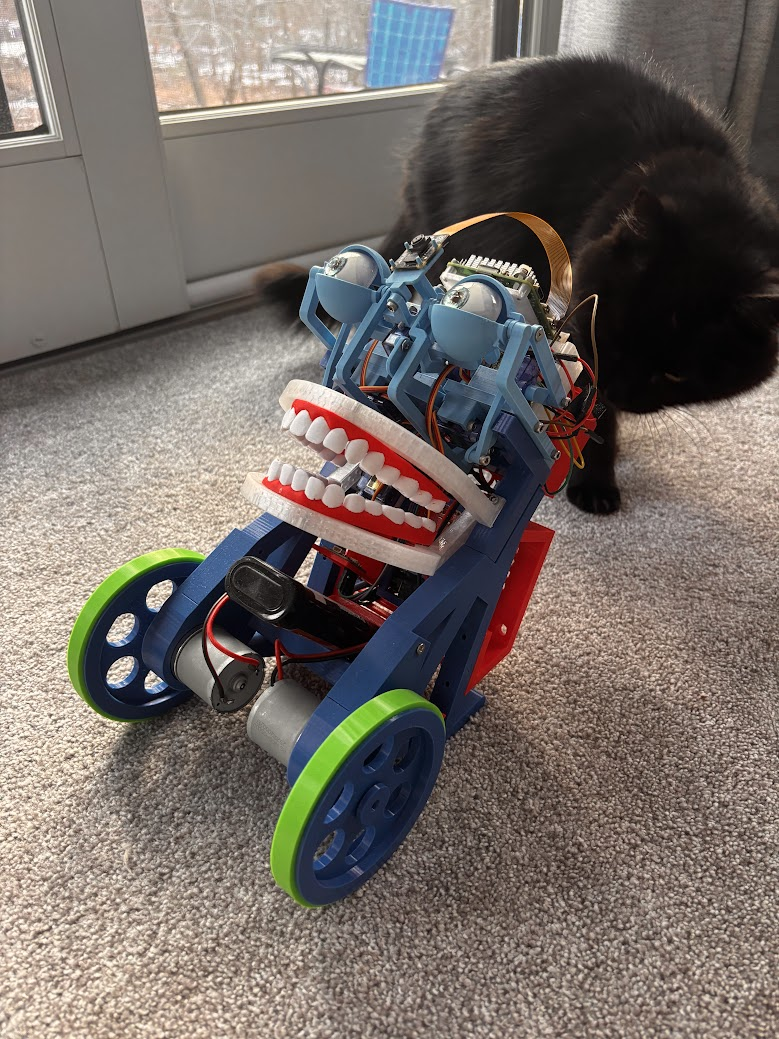
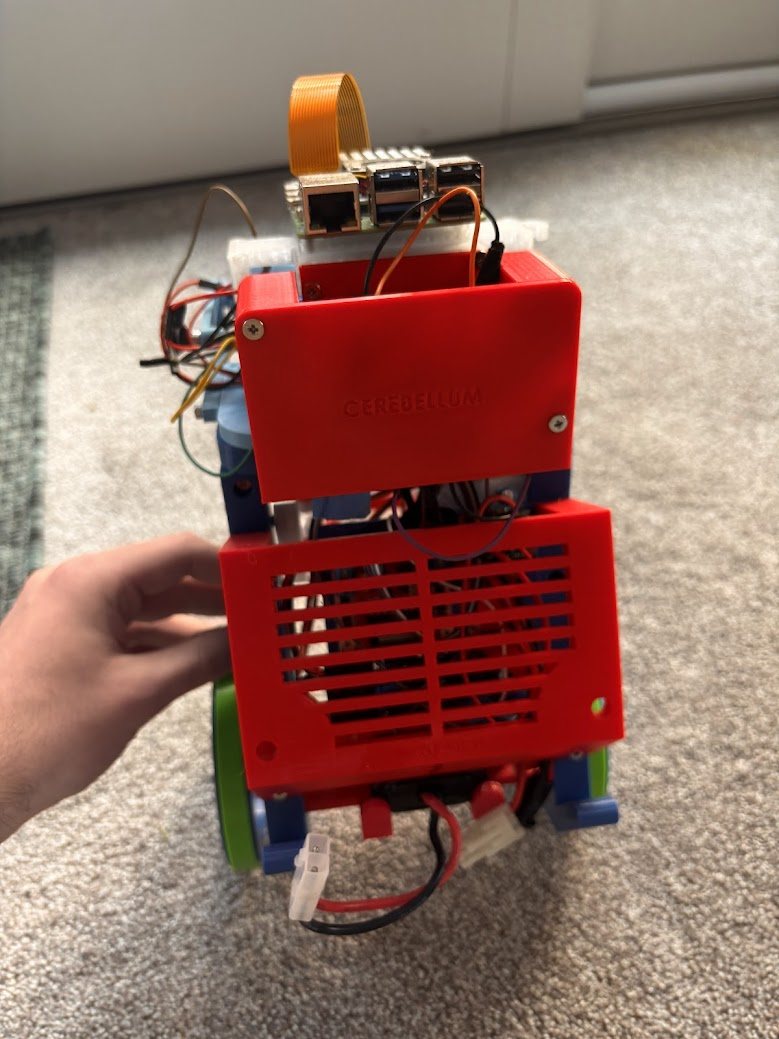
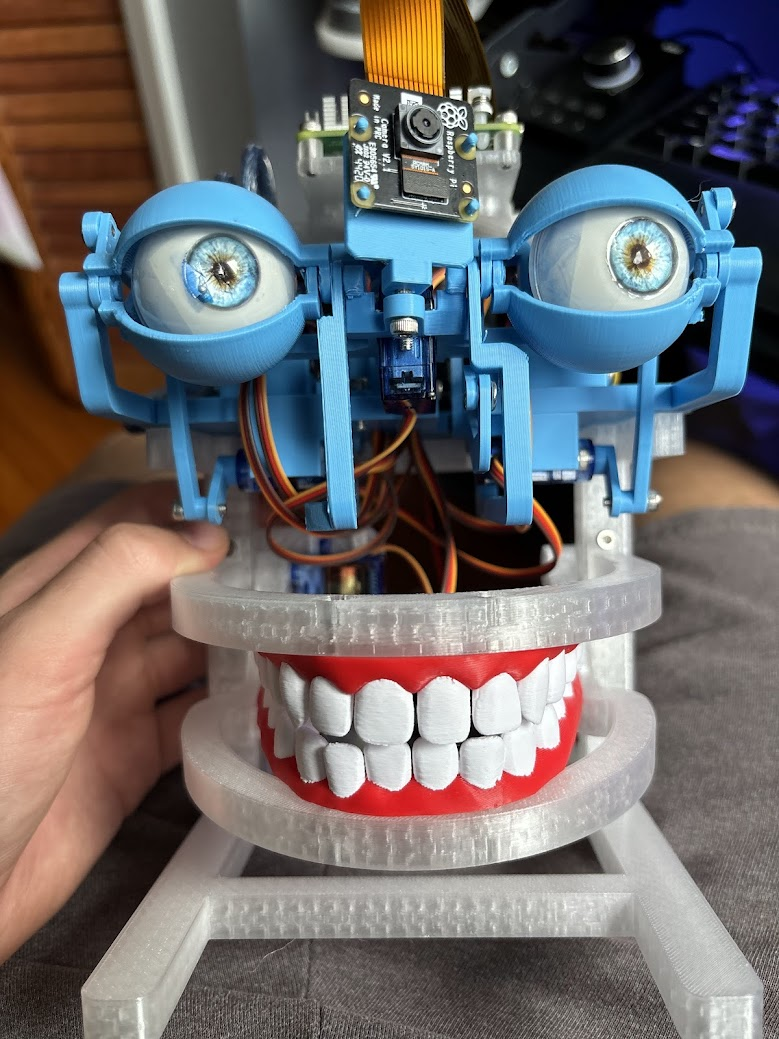
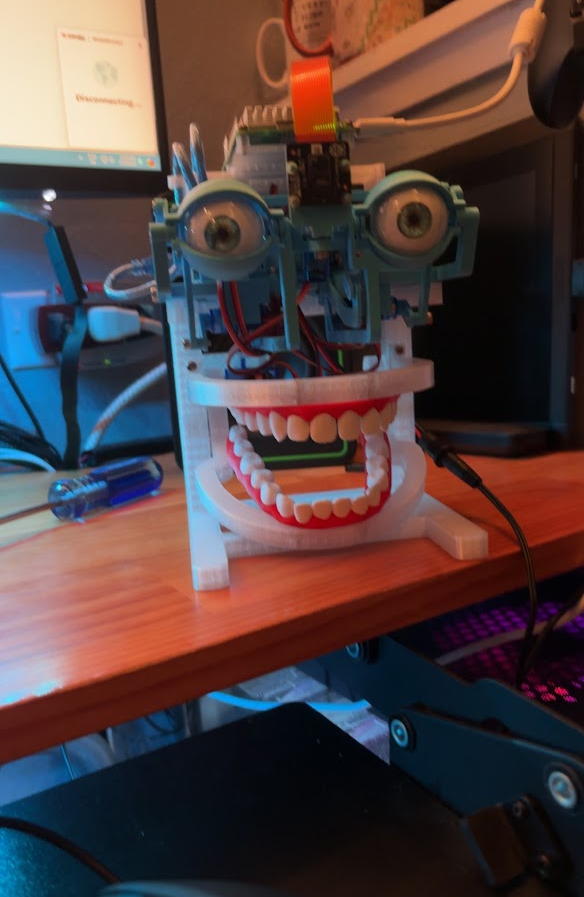
About this robot
This robot was a passion project of mine beginning back to the summer before I began my freshman year at Worcester Polytechnic Institute. I taught myself Solidworks and basic principles of mechanical engineering and robotics to design and 3D print this robot from the ground up. I programmed it using python with the PyGame library and the I2C adafruit PWM servo controller library. In the footage below, I am controlling the bot with an Xbox One controller, using the face buttons to switch between emotions, the triggers to control the individual eye lids, and the thumbsticks to control the mouth and gaze. The photos above are a chassis and wheels I recently designed and printed for the robot to support a NiMH battery, voltage booster (tuned to +12V), buck converter (tuned to 3.3V), motor controller (l298n), and bno055 IMU. Additionally, I have an ESP32 that is responsible for PID controller logic for the robot to balance and other motor functionality, along with battery voltage levels. I am currently in the stage of tuning the PID to control the balancing of the robots on its two wheels, which involves the feedback loop between the heading and orientation of the bno055 and the two 9V geared (300:1) motors. In the future, I would like to swap out the power system for higher-quality and more efficient parts and or design a more efficient and effective system entirely when I learn more through my coursework.
Components:
- 6 SG90 servos
- 1 ESP 32 (previously was using a raspberry pi pico W)
- 1 raspberry pi 5
- 2 Gearteasian 9V geared motors (300:1) ratio
- PETG plastic filament (used for base, teeth, and chassis)
- ABS plastic filament (used for eye assembly)
- 2 plastic eyes
- 1 raspberry pi camera
- 5mm and 10mm M3 screws (screw holes are plastic and sized to be self-threading)
- 1 Buck Converter (tuned to 3.3V to supply power to the ESP-32)
- 1 Voltage Boost Converter (tuned to 12V to power the L298n)
- 1 2600mA, 7.4V NiMH battery
- 1 l298n motor driver (dual H bridge)
- Standard Dupont wires to power digital circuitry
- 12 AWG electrical wire to power the 2 geared motors and power system
Software used:
- Thonny (for python programming)
- Visual Studio (for C programming)
- Solidworks (for design)
- Bambu Studio (for 3D printing)
Hardware used:
- Soldering iron
- Bambu Lab X1 Carbon
Programming languages used:
- C
- Python